

AAJ INDIA NEWS
NATIONAL NEWS DESK · INDIA AND BEYOND
Cyclone Arnab Weakens After Landfall in Andhra Pradesh; Two Electrocuted, Thousands Evacuated
Six-hour landfall process ends near Narsapur as torrential rain, damaged power lines and disrupted transport leave coastal districts on high alert
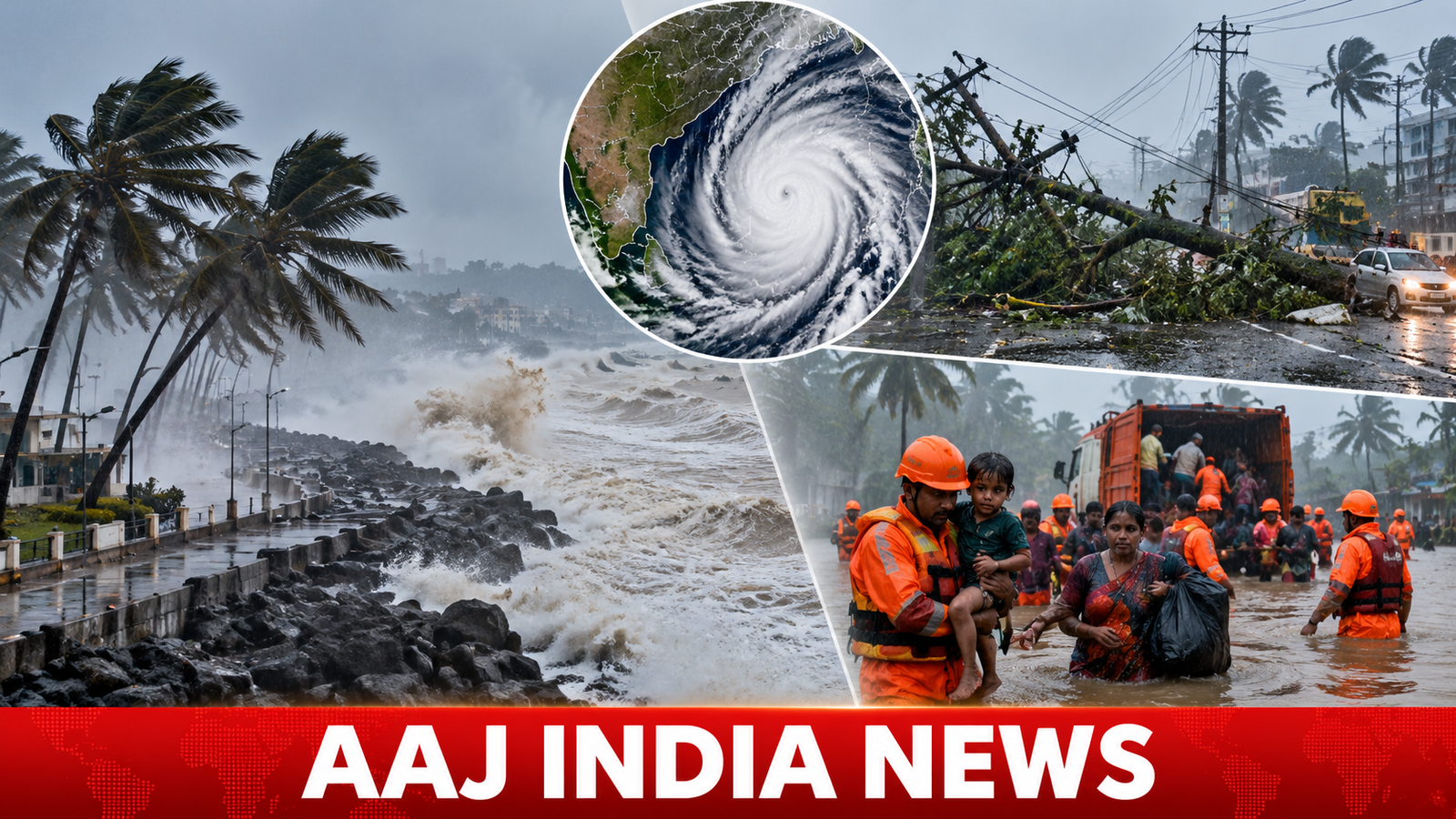
VISAKHAPATNAM, ANDHRA PRADESH: Cyclone Arnab weakened into a Severe Cyclonic Storm after completing its landfall along the Andhra Pradesh and Yanam coasts on Wednesday morning, but the immediate threat to coastal communities remains significant as heavy rainfall, damaged electricity infrastructure and transport disruptions continue to affect several districts.
The India Meteorological Department (IMD) said the system crossed the coast between approximately 2 a.m. and 8 a.m. on October 28, with its centre moving entirely over land near Narsapur in Andhra Pradesh’s West Godavari district. At the time of landfall, the storm packed maximum sustained winds of 125–135 kmph, with gusts reaching 150 kmph.
The cyclone’s weakening does not mean that the danger has passed. Strong winds, intense rainfall, localised flooding and exposed electrical lines continue to pose risks to residents and emergency personnel. Authorities are concentrating on restoring essential services, clearing blocked roads and ensuring that evacuated families remain in safe shelters until conditions improve.
Two people have died in separate electrocution incidents in Andhra Pradesh during the cyclone, according to officials cited by The New Indian Express. The deaths underline the continuing dangers posed by damaged power infrastructure even after the storm’s centre has moved inland.
Two Deaths Reported in Electrocution Incidents
A 53-year-old man died on Tuesday night after coming into contact with a live electrical wire that had snapped over an agricultural field channel in Visakhapatnam district, the newspaper reported, citing a senior district official.
In a separate incident on Wednesday morning, a 55-year-old woman died after accidentally stepping on an exposed live wire outside her home in Yellamanchili town in Anakapalli district, according to police cited in the report.
The incidents highlight the risks created by fallen electricity lines and damaged infrastructure during severe weather. Residents should avoid touching fallen wires, flooded electrical equipment or damaged poles and should report such hazards to the relevant authorities.
The reported deaths are the latest confirmed casualties in the available coverage reviewed for this report. Further official updates may change the casualty figures as district administrations continue their assessments.
Landfall Completed Near Narsapur
According to the IMD update reported by The New Indian Express, Cyclone Arnab crossed the Andhra Pradesh and Yanam coasts southwest of Yanam, with the centre passing approximately 20 kilometres east-northeast of Narsapur, 40 kilometres southwest of Yanam and 60 kilometres southwest of Kakinada.
The landfall process lasted approximately six hours, prolonging gale-force winds along the coasts of West Godavari, Konaseema, Kakinada and Yanam.
After the centre moved over land, the IMD downgraded the system from a Very Severe Cyclonic Storm to a Severe Cyclonic Storm. Further weakening was expected as the system moved inland in a north-northwesterly direction.
However, the weakening classification should not be interpreted as an immediate end to dangerous conditions. The combination of saturated ground, strong winds and damaged infrastructure can continue to affect communities after landfall.
Visakhapatnam Records More Than 200 mm of Rainfall
Coastal Andhra Pradesh has experienced heavy to very heavy rainfall associated with the cyclone. According to rainfall observations cited by The New Indian Express from the IMD’s 5:30 a.m. bulletin, Visakhapatnam-Waltair recorded cumulative rainfall of 216.9 mm.
| Location | Reported Rainfall |
|---|---|
| Visakhapatnam-Waltair | 216.9 mm |
| Kalingapatnam | 147.5 mm |
| Tuni | 123.3 mm |
| Kakinada | 118.4 mm |
| Machilipatnam | 115.2 mm |
Other reported totals included 147.5 mm at Kalingapatnam, 123.3 mm at Tuni, 118.4 mm at Kakinada and 115.2 mm at Machilipatnam.
The volume of rainfall has raised concerns over waterlogging, inundation of low-lying settlements, damage to agricultural land and pressure on drainage systems. The IMD’s October 28 warning also forecast extremely heavy rainfall and strong surface winds in coastal Andhra Pradesh, with further adverse weather expected over subsequent days.
The department warned during the landfall period that a storm surge of approximately 1.0–1.5 metres above the astronomical tide could inundate low-lying coastal areas. That was a forecast for the landfall period, rather than a confirmed measurement of flooding at every location.
Power Supply Disrupted, Trees and Electricity Poles Uprooted
Reports from affected districts describe fallen trees, damaged electricity poles, obstructed roads and interruptions to power supplies.
Hindustan Times reported that information received by the state secretariat’s control room included damage stretching from Srikakulam in the north to Bapatla in the south. Several areas experienced power outages, while damage to mobile towers and associated electricity supplies disrupted communications in some locations.
In Kakinada and Konaseema districts, hundreds of electricity poles were reported to have collapsed. Damage was also reported to hoardings, tin-roofed structures and poultry farms. In some villages, strong winds damaged homes and residents’ belongings.
The disruption has complicated efforts to restore normal services. Electricity restoration crews must work carefully around exposed wires and unstable poles, while road-clearing teams face the challenge of removing fallen trees without putting residents or workers at risk.
Chief Minister N. Chandrababu Naidu directed officials to prioritise clearing fallen trees, restoring electricity once wind conditions permit and maintaining essential supplies at relief centres, according to The Indian Express.
More Than 180,000 People Evacuated Across Andhra Pradesh and Odisha
Preventive evacuations were carried out on a large scale ahead of the cyclone’s arrival. Reuters reported that more than 180,000 people had been evacuated across Andhra Pradesh and neighbouring Odisha.
In Andhra Pradesh, The Indian Express reported that 84,396 people had been moved to 290 cyclone shelters by Wednesday morning. The figures refer to different geographical coverage and reporting scopes and should not be added together.
The state administration has arranged shelter facilities and emergency assistance for vulnerable communities. Officials have been instructed to ensure the availability of food, drinking water and medical support and to avoid sending residents home until conditions are considered safe.
The evacuation effort was designed to reduce the risk to people living in low-lying areas and vulnerable coastal settlements exposed to high winds, intense rainfall and possible seawater inundation.
Pregnant Women, Fishing Communities and Emergency Teams
The state’s preparations also included targeted measures for people requiring additional assistance. The Indian Express reported that nearly 5,000 pregnant women had been shifted to primary health centres, community health centres and nearby hospitals.
More than 30,000 fishing boats were reported to have returned from the sea, reducing the number of fishing crews exposed to dangerous marine conditions.
Emergency arrangements included the deployment or readiness of disaster-response personnel, medical teams, water tankers and generators. The state government also directed officials to monitor irrigation tanks and canals, address potential breaches and take steps to limit damage to crops and horticultural plantations.
The government estimated that crops across approximately 7.16 lakh hectares and horticultural crops covering 16 lakh hectares could be affected. These are potential exposure figures reported during preparedness operations, not a confirmed estimate of crop losses.
Railways and Airports Face Disruptions
The cyclone has also affected transport operations. Reuters reported that some train and flight services were cancelled, while operations at three airports in Andhra Pradesh were suspended during the severe weather.
The disruptions were precautionary measures intended to protect passengers and aviation personnel during dangerous wind and rainfall conditions.
Railway passengers and air travellers should check current information directly with their operators before departing for stations or airports. Service restoration may depend on inspections, the removal of debris and confirmation that operational conditions are safe.
Road users have also been urged to exercise caution in affected districts because of fallen trees, damaged roads, waterlogging and potential electrical hazards.
Odisha Remains on Alert
Although the landfall occurred along the Andhra Pradesh and Yanam coastline, neighbouring Odisha also faced evacuation requirements and adverse weather associated with the wider system.
Reuters reported that the combined evacuation total across Andhra Pradesh and Odisha exceeded 180,000 people. The Associated Press reported that Odisha officials planned to evacuate approximately 48,000 people from threatened areas.
Authorities have been monitoring rainfall, coastal conditions and the possibility of further disruption as the system moves inland. The scale of the required response will depend on the storm’s subsequent movement and the distribution of rainfall.
Residents in affected areas should follow state and district advisories rather than assume that the storm’s downgrade means all warnings have been lifted.
What Residents Need to Know
The immediate priorities are to avoid preventable injuries, protect displaced families and restore essential services without exposing workers or residents to additional danger.
People should stay away from fallen electrical wires, damaged poles, flooded electrical equipment and unstable structures. Residents in vulnerable locations should follow instructions from local authorities and should not return to evacuated areas until officials confirm that it is safe.
The IMD’s latest available forecasts and district-level instructions remain important for assessing continuing rainfall and wind risks. Emergency agencies will also need time to inspect infrastructure, restore power and establish the full extent of damage to homes, roads and agricultural land.
The Road Ahead
Cyclone Arnab’s landfall has been completed and the system has weakened, but the aftermath remains a serious operational challenge for Andhra Pradesh’s coastal districts.
The reported electrocution deaths, widespread power disruption, heavy rainfall and evacuation requirements demonstrate why emergency precautions must continue after a cyclone crosses the coast.
The next phase will focus on casualty reporting, restoration of electricity and transport, assistance to displaced residents and a more comprehensive assessment of damage to homes, crops and public infrastructure.
AAJ INDIA NEWS will continue to monitor official weather bulletins, government announcements and verified reports from affected districts as further information becomes available.